Home » Property Types We Serve » Restaurants & Grease Storage
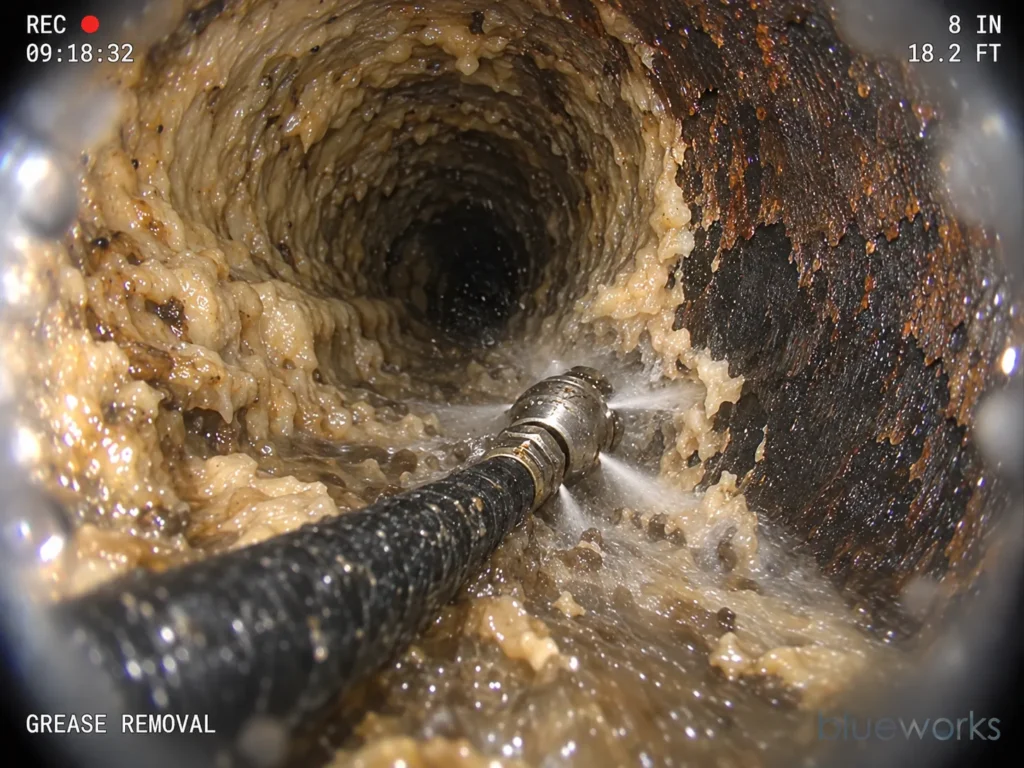
Fats, oils and grease cool and harden inside your kitchen drains, and over time they narrow the line until floor drains and sinks back up. We remove the buildup with hydro-jetting or mechanical cleaning chosen for your pipe, camera-inspect what is left and line or replace the sections that have corroded through.
Estimates are free. Camera inspections may carry a charge.
Of 4- and 6-inch cast-iron kitchen sanitary line lined overnight on a 288-bed Florida medical campus.
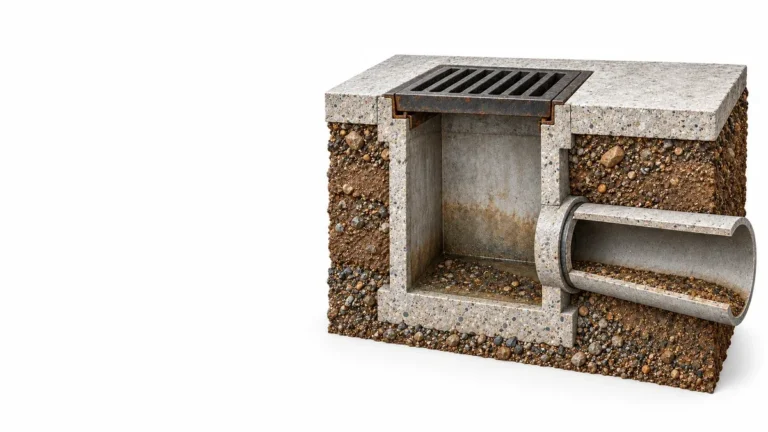
Your grease interceptor or trap stores the fats your kitchen sends down the drain, so they settle out before reaching the building sewer. The lines on both sides of it need attention. The kitchen lines feeding it collect grease and food solids. The outlet line and the building sewer downstream show what is getting past it.
We camera-inspect both sides, clean them and repair the sections that have cracked, sagged or corroded. Your local utility sets how often the interceptor itself must be pumped. Between pump-outs, clean lines keep grease moving to the interceptor instead of building up under your kitchen.
Hot water carries grease away from the cook line, then it cools and sticks to your pipe wall a few feet downstream. Layer by layer, the opening shrinks until a busy service is enough to back up the floor drains. We cut and flush the grease out and show you the cleaned line on camera.
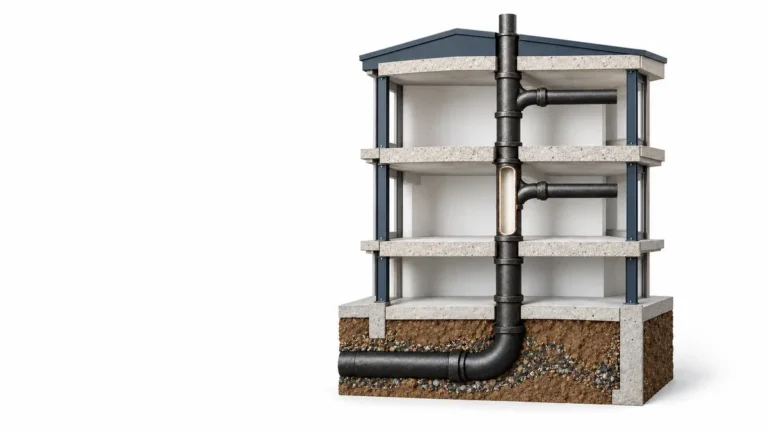
Older kitchens often drain through cast iron, and a corroded, pitted wall gives grease more to grip. Cleaning alone buys less time on a rough wall. Where your pipe is suitable, a liner gives your line a new, smooth interior.
A sag in the line outside holds grease and solids that should keep moving. Cracks and roots catch them. Our camera finds the low spot or break, and we line or replace that section.
Kitchen lines can be lined overnight, as on the medical campus kitchen in our record.
Fragile cast iron and failed joints can be damaged by high-pressure jetting, so we look first when your pipe’s condition is unknown.
We choose hydro-jetting, mechanical cutters or rodding for your pipe’s material and condition.
Cured-in-place pipe (CIPP) restores suitable pipe from inside. Collapsed or sagging sections are replaced.
The closing footage shows the line clean and restored. A follow-up camera inspection later shows how fast buildup returns, which helps you decide how often the line needs attention.
We scheduled the work in morning, daytime and evening windows around the property’s requirements.
When several restaurants share a building sewer, grease from one tenant can back up the line for every tenant downstream. We inspect the shared line, identify which branch is loading it, and scope the repair for the whole run. Our retail and shopping center page covers shared-line work for landlords.
Yes. We can schedule kitchen line work before you open, after you close or overnight.
It can, if your pipe is fragile and nobody looks first. When your line’s condition is unknown, we camera-inspect before we choose the cleaning method.
Yes, where your pipe is suitable. Our record includes more than 1,000 feet of cast-iron kitchen sanitary line lined overnight.
It depends on your volume, menu and pipe. A follow-up camera inspection shows how fast buildup returns, and that sets a sensible interval. Your utility’s rules set the interceptor pump-out schedule.