Home » Property Types We Serve » Industrial Manufacturing Structures
We work on storm, process-water and sanitary drains at operating plants, including large-diameter pipe that is taking in soil or has lost part of its wall. Where your pipe can carry a liner, we restore it from inside, so less of your yard, slab and process area has to be excavated.
Estimates are free. Camera inspections may carry a charge.
Corrugated-metal drain carrying storm and process water at an FPL facility in Florida, relined after holes let in sand and rock.
Nearly 5,000 feet of 6- and 10-inch carrier pipe, plus more than 500 feet of bulk-handling troughs, cleaned in dry containment for a port authority.
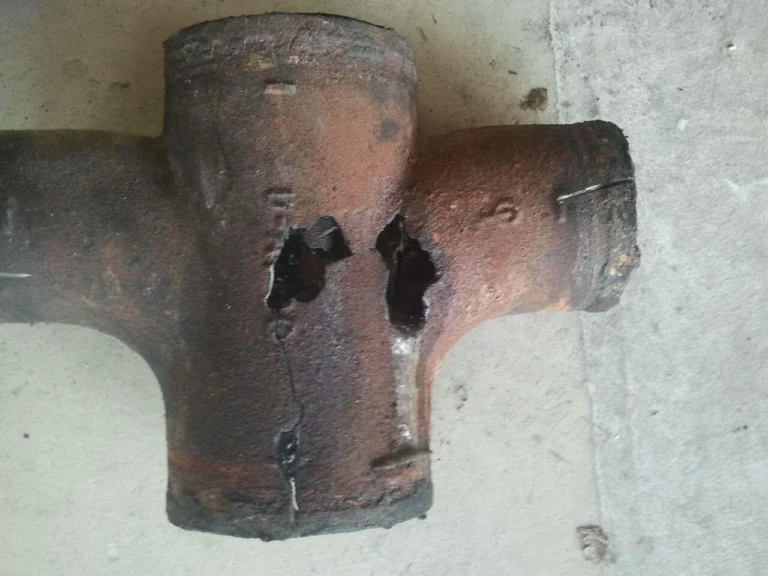
Corrugated-metal and steel drains rust through at the invert, where water sits. Once the wall has holes, it draws in sand and rock, loses capacity and undermines what sits above it. Where the remaining structure can carry a liner, we reline it.
Plant drains collect sediment, scale and residue from the processes they serve. We clean them with methods chosen for your pipe and what it carries, and we keep the removed material contained when your site requires it.
Heavy loads and vibration move buried pipe. Open joints let soil in and water out, which shows up as surface settlement over the line. We camera-inspect the run to locate each joint failure before proposing a repair.
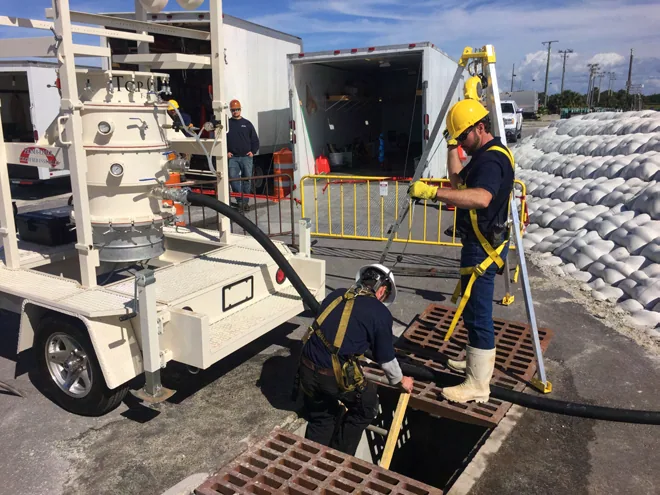
Industrial drains can mean confined entry, work at open grates and lockout of connected equipment. We work to your site’s safety program and permit system.
Cleaning and inspection come first, so the repair design reflects your drain as it is.
A drain with holes in its wall needs preparation built around that damage before a liner goes in.
We select the cured-in-place pipe (CIPP) liner and cure method for your pipe’s diameter, length, bends and service conditions, and we confirm that the lining system suits what flows through your line before we propose it.
You receive the before and after footage with the closeout.
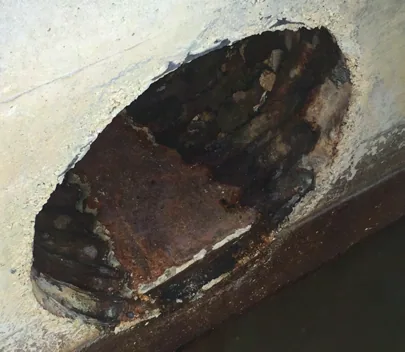
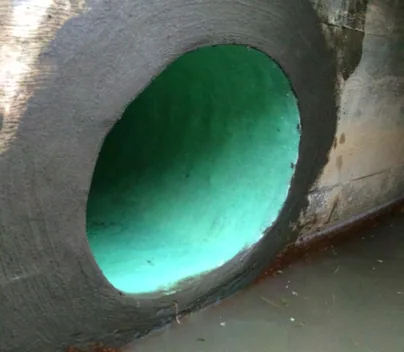
The drain carried storm and process water at an FPL facility in Florida. Holes in its corrugated-metal wall were letting in rock and sand, so we adapted the preparation to the deteriorated pipe, changed lining direction where the run required it, inverted the liner with air, cured it with steam and closed out with a final inspection. Our January 2016 report documents the job over a staged, multi-day schedule.
Manufacturing plants add process lines, washdown drains and chemical exposure to the usual storm and sanitary systems. Temperature, chemistry and solids decide which liner and resin can work in your pipe. We confirm that fit with the product’s documentation before we propose lining a process drain, and we propose replacement where no lining system fits.
The scope lists each drain segment, its condition, the method we propose and the outage it needs, so your maintenance planners can slot it into a shutdown or a production gap.
We can, depending on how much structure remains. The FPL drain had holes that admitted sand and rock, and we adapted the preparation before lining it. The inspection shows whether your drain qualifies.
Yes. The FPL project was carried out at a demanding industrial site, where we coordinated access, preparation and cure. We plan badging, escorts, permits and staging with your team before mobilizing.
We confirm that a lining system is rated for your line’s chemistry and temperature before we propose it. Where none is, we propose replacement.
It depends on the length, diameter, preparation and cure. The FPL job ran over a staged, multi-day schedule. Your scope states the outage for each segment before you approve it.