Home » Property Types We Serve » Governmental Structures
We work on the large-diameter storm runs, sanitary mains and building drains of transportation, correctional, port and other public facilities. Where your pipe is suitable, we restore it from inside through manholes and existing access, so less pavement and fewer secured areas have to be opened.
Estimates are free. Camera inspections may carry a charge.
The largest of the 42-, 30- and 24-inch storm pipes we lined for a Department of Transportation project.
Of underground storm lining on that same transportation project.
Inspection, cleaning and lining on a correctional facility’s storm collection system.
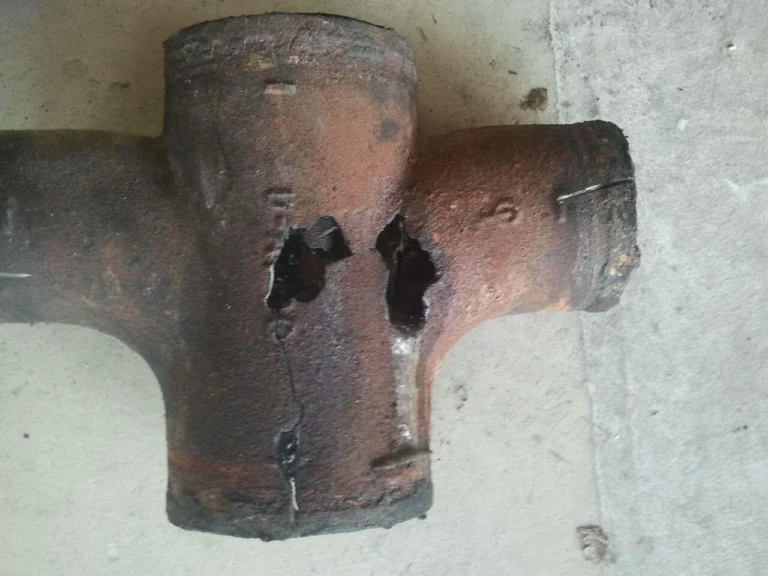
Storm pipe under roads, yards and parking carries runoff at volume. When joints separate or the wall corrodes through, it draws in soil, leaves voids under the pavement and loses capacity in heavy rain. We clean the run, record its condition on camera and line it where the host pipe can carry a liner.
Roots and open joints let groundwater into your sewer and restrict the flow coming out of your buildings. We cut the roots, clean the main and restore suitable sections with cured-in-place pipe (CIPP).
When a sound pipe has a single crack or joint failure, we repair that length with a point repair instead of lining manhole to manhole. Our LightRay LR3 ultraviolet (UV) system cures fiberglass spot repairs where your pipe’s condition and access support it.
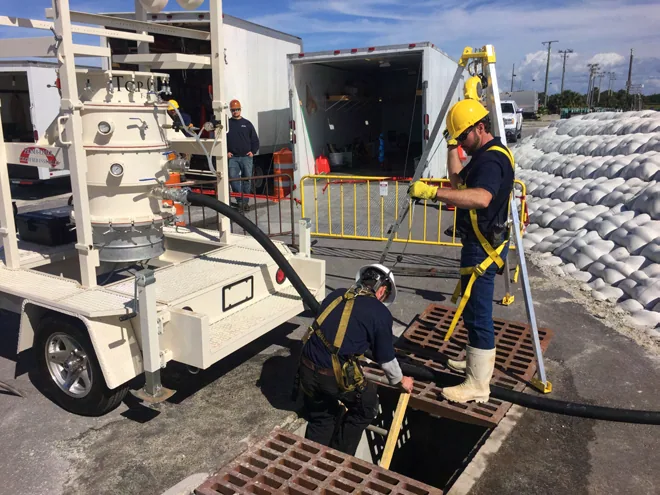
Storm and sewer work can mean manhole entry, traffic control and dry-weather windows. We agree those, along with escorts, badging and secured-area rules where your facility has them, before mobilizing.
The footage documents cracks, roots, offsets, infiltration and wall loss along the line, so the scope rests on recorded defects.
Sediment, roots and debris come out before lining, which restores flow and gives the liner a sound surface.
We select full-length CIPP or a point repair for each segment, based on its condition, diameter and access. When a pipe has collapsed beyond what a liner can restore, we replace that section.
You receive closeout footage for your asset records.
Agency and property names are withheld on our published reference list.
Cleaning came before the repair, and a final camera inspection confirmed the result. Our municipal buildings page covers that work in full.
When your project has an engineer’s specification, we price the work against it. When it does not, our inspection findings and proposed scope give your engineer and procurement team a defined starting point.
Yes, where the rest of your pipe is sound. We repair the defect length with a point repair, cured with our UV system or with an ambient-cure resin, depending on your pipe and access. A collapsed or badly deformed section needs replacement instead.
Our record includes storm pipe up to 42 inches in diameter. The size we can line on your project depends on your pipe’s shape, material, condition and access, which the inspection confirms.
We scope manhole-related work as part of a sewer or storm project when the inspection shows it is needed. Tell us what you are seeing and we will confirm whether it fits our scope.
Florida is our principal market. We also take on projects in California, Georgia, North Carolina, South Carolina and Texas after confirming fit, mobilization and scheduling.